
More on the utopian potential of Compositions of Care
Alle blogindlæg
Forside
More on the utopian potential of Compositions of Care
As Ruth Levitas suggests in The Utopia as Method, “the different, the better” can sometimes be found in unexpected places. It may not be widespread, but it exists in small pockets within the everyday life of welfare institutions.
I understand such pockets as Compositions of Care, as moments of aesthetically informed ethical everyday practice for and with people in need of care. It could look like this:
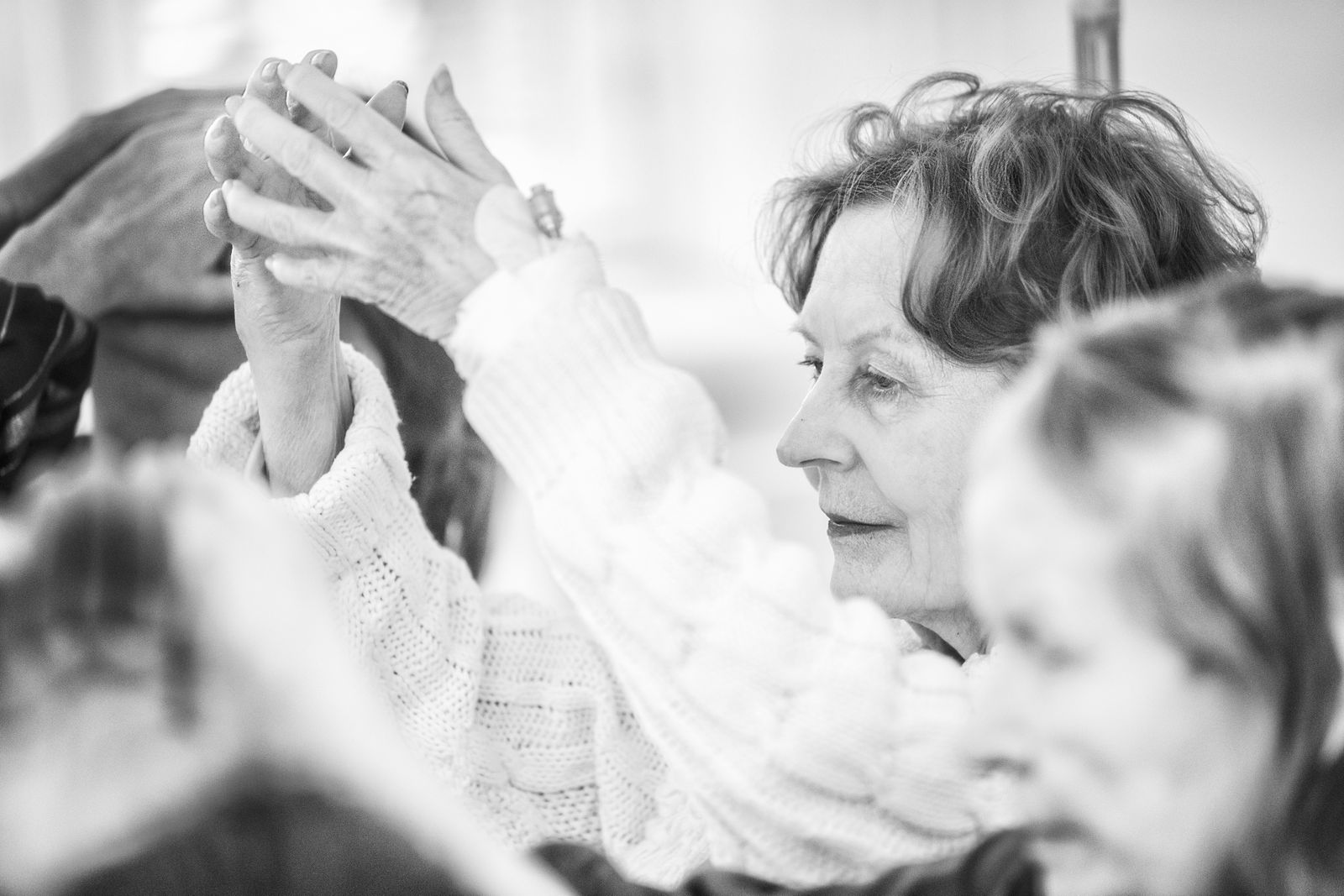
Situation 1: Dancing in the Common Room
In the common room, people are dancing. Bodies move slowly, exploring and graceful. The movements are often accompanied by smiles and laughter. A dance company is spending a week at the nursing home, hosting a workshop with the residents who attend the day centre. The staff are dancing too. For a moment, they set aside their professional roles and expertise and enter the shared space of movement and play. Hierarchies soften; bodies meet differently.
Situation 2: Music in the Intensive Care Unit
For a moment, the usual sounds and hectic activity of the intensive care unit subside. Two musicians are visiting a patient’s room. They play for the patient, who lies in the bed surrounded by relatives. A nurse is present as well. The measurable effects are visible in the patient: lower pulse, changes in blood pressure. But the moment seems to affect more than the patient. The music—and the temporary space of calm it creates—also seems to benefit the staff who are present.
Situation 3: Reading and writing SOSU Poems*
Recently, a social and health care student struck up a conversation with a resident who has a deep interest in poetry. They began reciting poems to one another. She recited some of her own poems—what she calls “SOSU-poems.” These poems grow out of the concrete, physical work she encounters during her placement at a nursing home. Through language, she explores the everyday tasks that shape the daily life of social and health care work. And, poetically, she shares this with residents
* SOSU is in Danish short for social and health care worker
I see these three situations as examples of compositions of care, informed by
Co-creation, where aestheticly informed ethic practices are developed by and shaped between participants
Bodily attentiveness, where care is mediated through movement, presence, and sensory awareness
The aesthetic good, where experiences of beauty, meaning, and expression become part of care itself
What I find particularly compelling is to think of how such practices can be integrated into the professional identities of care workers. And how this might complement existing competencies, kindly challenging established professional and social roles from within?
What would it require from our welfare institutions—and from the curricul of educational programmes for welfare professions—to invite aesthetically informed ethical practice into everyday institutional life and allow it to take root there?
The various small utopian pockets suggest that such futures are already emerging. The question is how we recognize them, nurture them, and learn from them in order to give them curricular presence.